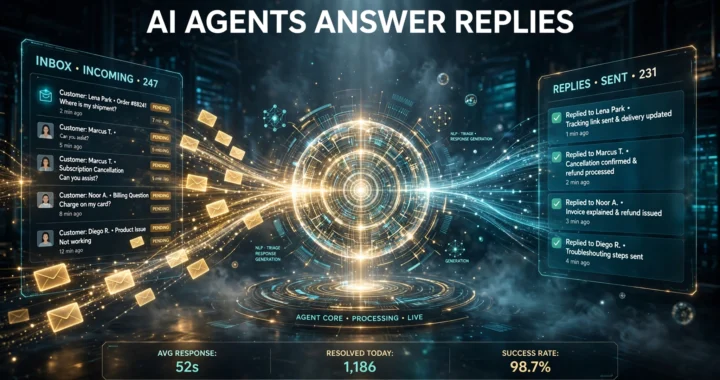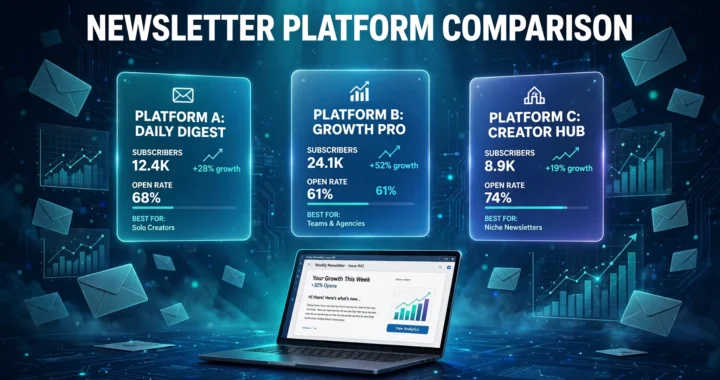
Agentic AI email marketing is the shift from software a marketer operates by hand to software an AI agent can operate on behalf of the marketer. In 2026, that shift stopped being a concept. Klaviyo opened the full platform to external AI assistants, ActiveCampaign built an autonomous agent suite inside the platform, and the Model Context Protocol, known as MCP, turned both moves into a pattern that any platform can follow.
This guide explains what agentic AI means for email teams, how the Klaviyo MCP server works, what ChatGPT and Claude can actually do with a connected account today, how to set the connection up safely, and where the real limits sit. The channel at the center of the shift is the same one that keeps outperforming newer channels, which is why the revenue case in our guide on why email marketing still wins matters even more when agents start doing the work.
What Is Agentic AI Email Marketing
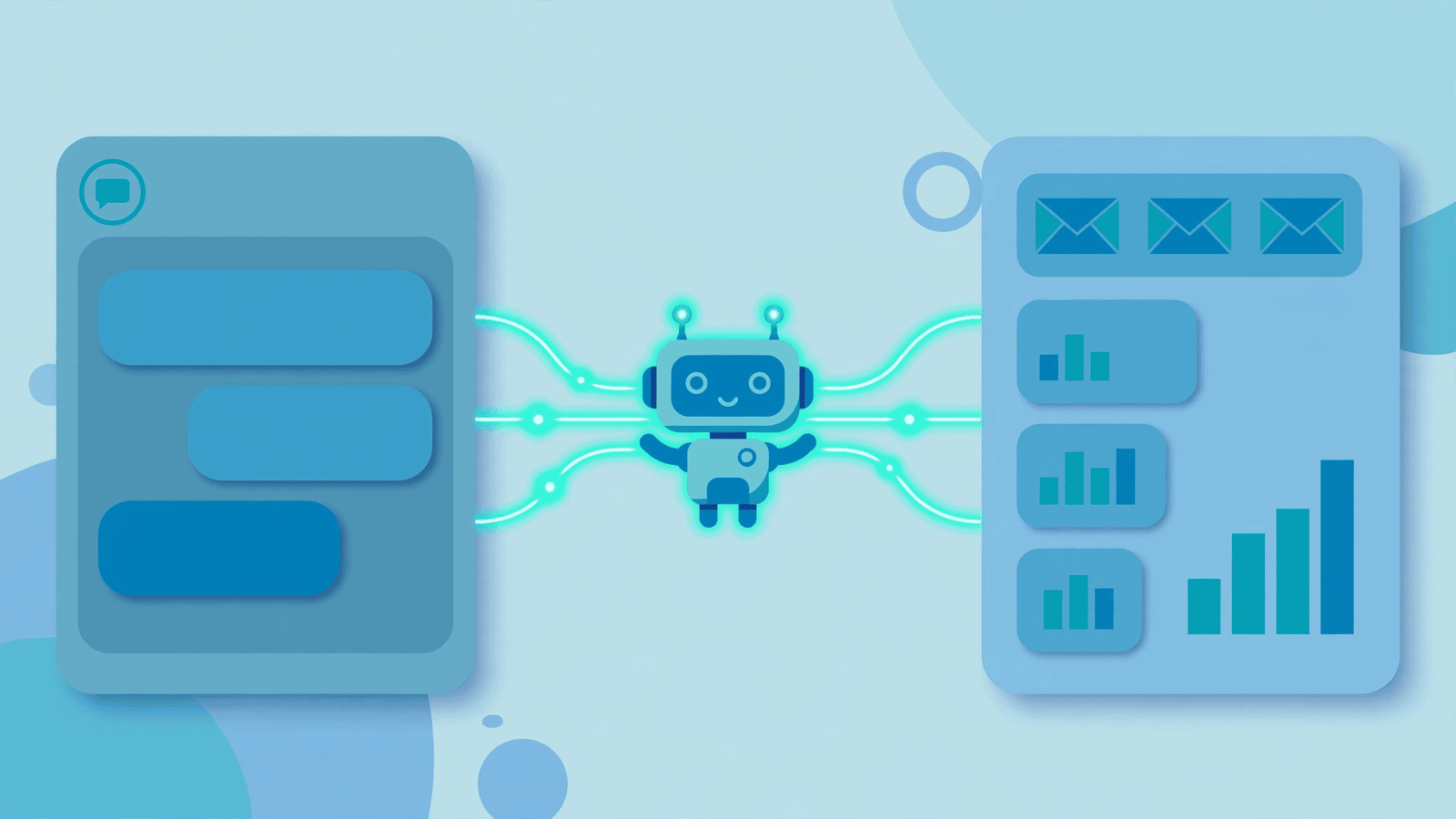
An AI agent is a system that can plan a task, use tools to carry the task out, check the result, and keep going until the goal is met or a human steps in. Applied to email, agentic AI means the assistant does not stop at writing a subject line. It can read campaign data, build a segment, draft the campaign, and, with the right permissions, send the campaign and report back on performance.
The word agentic matters because it describes a change in who does the clicking. A chatbot answers questions. A copilot suggests text inside a tool a human still drives. An agent receives a goal in plain language, breaks the goal into steps, and calls real functions inside the email platform to complete those steps. The marketer moves from operator to supervisor.
How Agentic AI Differs From Classic Automation
Classic automation follows rules a marketer defines in advance: if a subscriber abandons a cart, wait one hour, then send email one. The logic is fixed, and the platform never questions it. Most email marketing automation AI features, such as a subject line generator or a send time prediction, advise the marketer inside that fixed structure.
Agentic systems work from goals instead of fixed rules. The marketer states an outcome, and the agent decides which tools to call, in which order, based on live account data. The table below shows the practical difference.
| Dimension | Classic automation | Agentic AI |
|---|---|---|
| How work starts | A trigger or a schedule set by a human | A goal stated in plain language |
| Who builds the campaign | The marketer, step by step in the platform UI | The agent, with the marketer reviewing the result |
| How data gets used | Only the fields and events the rule references | The agent queries reports, segments and events as needed |
| How decisions happen | Fixed if and then logic | The agent chooses tools and order based on live data |
| Role of the marketer | Operator | Supervisor, approver and strategist |
| Example task | Send email two when a contact clicks email one | Find the segment that stopped engaging and draft a win-back campaign |
What Are AI Agents in Marketing
In practice, AI agents in marketing are usually specialized rather than general. One agent watches performance and flags problems. Another builds segments. Another drafts campaigns. ActiveCampaign describes Active Intelligence as a team of agents with separate jobs, and Klaviyo splits the work between agents that live inside the platform and external assistants that connect from outside. The pattern is the same in both cases: narrow jobs, real tools, and a human who sets the goals and the guardrails.
Classic automation executes the plan a marketer wrote. An agent writes a draft of the plan, executes the approved parts, and reports what happened. The approval step is what makes the system safe to use.
How Does Klaviyo MCP Work
The Klaviyo MCP server is the clearest working example of agentic AI email marketing today, so it helps to understand the mechanics before the marketing claims.
The Model Context Protocol in Plain English
MCP is an open standard for connecting AI applications to external systems. The official MCP introduction compares the protocol to a USB-C port for AI applications: one standard connector shape that lets an assistant such as Claude or ChatGPT plug into data sources, tools and workflows. Anthropic introduced the protocol, and OpenAI documents the same standard for ChatGPT in the OpenAI guide to building MCP servers. A platform builds one MCP server, and every compatible assistant can use it.
Inside that structure, the AI assistant is the client and the platform runs the server. The server exposes a list of tools, where each tool is one action the assistant may request, such as reading a campaign report or creating a segment. The assistant never touches the database directly. It asks the server, the server checks permissions, and the server returns data or performs the action through the platform API.
Klaviyo Headless Explained

Klaviyo released the MCP server in beta in 2025 and announced general availability on August 20, 2025, in the Klaviyo MCP server announcement. The server launched for tools such as Claude Desktop, Cursor, VS Code and Windsurf, with a remote hosted option and OAuth sign-in, available to all Klaviyo customers.
The bigger step came a year later. At the K:BOS conference on September 9, 2026, the Klaviyo headless launch opened 260+ MCP tools and capabilities and 490+ APIs to Claude, ChatGPT, or any AI system a team already uses. Headless email marketing means the interface is optional: a marketer can work from inside a chat window, or an agent can read, write and go live without anyone opening the Klaviyo interface at all. The same release added SQL queries in plain language through the data platform, so a marketer can ask a question through Composer, MCP, or another agent and receive the answer together with the SQL that produced it.
The Tools an Agent Can Call in Klaviyo
The Klaviyo MCP tools reference lists more than 260 tools, and the list explains what autonomous email campaigns really mean in practice. Read tools cover campaign reports, flow reports, segment values and form performance. Write tools include create campaign, assign a template, create flow, create segment, create list, update profiles and build email templates. One tool deserves attention in any safety discussion: the reference includes a send campaign tool, plus a cancel campaign send tool. Sending is not a demo feature. It is part of the documented surface, which is why the setup and approval sections of this guide matter.
The same headless logic applies beyond one vendor. Any platform with a complete API can expose an MCP layer, and teams comparing the API depth of providers can start with our roundup of the best email API services.
Can ChatGPT Run My Email Campaigns

The short answer is yes, within limits that depend on the platform, the connection route and the permissions granted. The Klaviyo MCP overview gives example prompts that show the intended working style: “Show me the performance of my email campaigns from the last 30 days.” “Which flows are performing the best in terms of conversions?” “Create an email campaign promoting our Memorial Day sale.” Analysis first, creation second, sending last. That order is the realistic way to adopt agents.
Tasks an AI Agent Handles Well Today
- Performance questions in plain language. Ask which campaign drove the most revenue, how click rates changed, or how two accounts compare, and the agent queries the real reports instead of a static export.
- Segment and list work. The agent can suggest segments based on top performing audiences, create the segment, and report the size before anyone targets it.
- Campaign drafting. The agent can create the campaign, assign a template, draft subject lines similar to past top performers, and upload images or lists of profiles.
- Flow building and audits. The agent can create flows, inspect flow structure, and compare flow performance, which turns the quarterly flow audit from a day of clicking into a review task.
- Data questions with SQL. Through the headless layer, a plain language question becomes a SQL query over profiles, events, segments, lists and catalogs, with the query shown for verification.
- Scheduled reviews. Klaviyo documents brands that use MCP to automate a weekly performance review and post the findings to Slack, and Composer inside Klaviyo can run scheduled tasks such as a monthly performance summary.
- Sending, when a team allows it. The send campaign tool exists, so a fully connected agent can send. Most teams should treat that permission as the final step of adoption, not the first.
Where Agents Still Struggle
Agents inherit the quality of the data and the brand material available to them. An account with messy profile properties, inconsistent naming and three years of untested subject lines gives the agent a weak foundation, and the output shows it. Agents also lack judgment about context outside the data: a campaign can be statistically sound and still wrong for a sensitive news day or a brand moment. Finally, tool coverage differs per platform and per plan, so a workflow that works in one account may not exist in another. Treat agent output as strong draft work from a fast junior marketer, not as finished strategy.
How to Connect an Email Platform to Claude or ChatGPT
The Klaviyo route is documented end to end, and the pattern transfers to any platform with an MCP server. The Klaviyo connection guide is the source for the steps below.
- Check the account role first. The MCP server is available to Klaviyo users with an Owner, Admin or Manager role.
- Choose the connection route. Claude offers a listed Klaviyo connector, and ChatGPT offers a Klaviyo app. Both are the fastest route. A custom connector with the remote server URL gives more control, and a local server suits developer tooling.
- Connect and approve. In Claude, open Settings, then Connectors, browse for Klaviyo, and approve access in Claude and in Klaviyo. In ChatGPT, add the Klaviyo app from Settings, then Apps, or create a custom app with the server URL https://mcp.klaviyo.com/mcp and OAuth as the authentication method.
- Start in read-only mode. Add the read-only parameter to the server URL, or use a read-only API key locally, so every write tool is disabled during evaluation.
- Run analysis prompts for one to two weeks. Ask reporting questions, verify answers against the platform dashboard, and note where the agent misreads the account.
- Enable one low-risk write task. Segment creation or campaign drafting is the right first write. Keep sending disabled.
- Add approval rules before any send permission. Decide who approves campaigns, which lists the agent may target, and what volume cap applies. Only then consider the send tool.
| Connection route | Where setup happens | Sign-in method | Best for |
|---|---|---|---|
| Claude listed connector | Claude Settings, Connectors | OAuth approval in Claude and Klaviyo | The fastest start in Claude, on Pro, Max, Team and Enterprise plans |
| Claude custom connector | Claude Settings, Connectors, Add custom connector | Remote server URL plus OAuth | Multiple accounts or safety parameters on the URL |
| ChatGPT app | ChatGPT Settings, Apps | OAuth approval | ChatGPT users who want the listed integration |
| ChatGPT custom MCP app | ChatGPT developer mode, Create app | Server URL plus OAuth | Full control over the connection in ChatGPT |
| Local MCP server | Desktop client configuration file | Private Klaviyo API key with chosen scopes | Developers and local tools such as Cursor or VS Code |
Start read-only. An agent that can only read can still save a team hours every week, and the read-only phase teaches the team exactly which answers to trust before any write permission exists.
Benefits of AI Agents for Email Marketers
The benefits of AI agents for email marketers cluster into four areas. The first is speed: reporting questions that once needed a dashboard session and a spreadsheet now take one prompt, and campaign drafts start from account data instead of a blank page. The second is depth: plain language SQL and cross-account comparisons surface patterns that a busy team would never query by hand.
The third benefit is consistency. Scheduled tasks and saved workflows, called Skills in Klaviyo Composer, run the same weekly review with the same brand guidelines every time. The fourth benefit is coverage. Agents watch performance continuously, so a declining flow or a cooling segment gets flagged when it starts, not at the end of the quarter. AI marketing agents do not remove the marketer from the loop. The agents move the marketer to the parts of the loop where judgment lives: goals, offers, brand and approval.
Is AI Automation Safe for Email Marketing
AI automation is safe for email marketing when the team treats the agent like a powerful new employee: limited access at first, clear rules, and approval for anything public. The technology includes real controls. The failures happen when a team skips them.
Human Approval and Brand Control

Three controls do most of the work. First, permission scope: the Klaviyo connection guide documents a read-only mode that disables every write tool, a toolset parameter that limits the server to chosen API scopes, and an option to disable tools that read user generated content, such as profile properties and event data, because an LLM could interpret that content as instructions. Second, approval flow: inside Klaviyo, the Composer workflow described in the Klaviyo Composer help guides is brief, review, edit, then approve before sending, and the K:AI Marketing Agent launch post states that generated emails and flows can be edited before launch and pass brand quality checks. Third, account roles: only Owner, Admin and Manager users can connect the MCP server at all.
ActiveCampaign takes the same position from the other direction. The Active Intelligence FAQ states that the user sets the goals, the guardrails and the cadence, that agents propose and draft proactively, and that the user decides how much runs automatically and how much waits for review, with every action visible and reversible.
Deliverability Rules Do Not Change
An agent sending a campaign changes nothing at Gmail, Yahoo or Microsoft. Authentication, complaint limits and one click unsubscribe apply to agent-sent mail exactly as they apply to human-sent mail, and our checklist of the bulk sender requirements 2026 remains the baseline. The new risk is speed: a misconfigured agent can create and send at a pace no human team would match, so a targeting error or a broken template reaches the full list before anyone notices. Volume caps, test sends to internal lists, and a human approval gate on the send tool are the correct response, not avoidance.
Klaviyo K:AI vs ActiveCampaign Active Intelligence

The two flagship offers show the fork in the market. K:AI is the Klaviyo AI family. It includes the Marketing Agent, which analyzes a website and builds an on-brand strategy with ready campaigns, flows and signup forms, and Composer, the in-platform agent that analyzes, audits and creates campaigns, flows and segments. The Klaviyo Composer announcement adds the open dimension: through MCP, the same account data is reachable from Claude or ChatGPT. Read our explainer on what is ActiveCampaign for the platform basics behind the rival offer.
Active Intelligence is the ActiveCampaign answer: one autonomous suite inside the platform. The Active Intelligence site lists specialized agents for campaigns, content, automations, segments, insights and scheduled tasks, and the Active Intelligence Workspace announcement describes a conversational workspace where a marketer describes a goal and agents generate the emails and multi-step automations.
| Factor | Klaviyo K:AI | ActiveCampaign Active Intelligence |
|---|---|---|
| Core approach | Built-in agents inside Klaviyo, plus an open MCP layer for external assistants | An autonomous agent suite that lives inside ActiveCampaign |
| Where the agent works | Inside Klaviyo, or inside Claude, ChatGPT and other AI tools through MCP | Inside the Active Intelligence Workspace in ActiveCampaign |
| How work starts | Marketing Agent builds proactively from the website; Composer works from briefs, audits and scheduled tasks | The user sets goals and guardrails; agents propose, draft and surface work proactively |
| Control model | Account roles, read-only mode, tool and scope limits; generated assets editable before launch; approval before sending in Composer | The user decides how much runs automatically and how much waits for review; actions visible and reversible |
| Data foundation | The Klaviyo data platform and account data, with benchmarks drawn from 205,000 customers | Account data first, 500+ signals per decision, anonymized network intelligence across 100,000+ businesses, and PII never trains a model |
| Availability | MCP server available to all Klaviyo customers; Marketing Agent available in all Klaviyo accounts | Workspace included in Pro and Enterprise tiers; the wider agent suite opens in waves by invite, with pricing shared in the invite |
| Best fit | Consumer brands that want agents working from the AI tools the team already uses | Growing businesses that want autonomy inside one platform with explicit guardrails |
The honest summary: Klaviyo bet on openness, ActiveCampaign bet on integration. Teams that live in ChatGPT or Claude all day will feel the Klaviyo route as the natural one. Teams that want one vendor to own the full loop, from data to send to measurement, will prefer the Active Intelligence design.
Which Teams Should Adopt Now, and Which Should Wait
Adopt now if the team already runs a platform with a mature MCP or agent offer, sends campaigns weekly or more often, and loses hours to reporting and repetitive build work. Adopt now as well if the account data is clean, naming is consistent, and one named person can own approvals. In that situation, the read-only phase alone usually pays for the change. These are the teams getting real value from AI agents email marketing today, because the workload the agents remove is real.
Wait, or move in stages, if the list data is unreliable, if no one can say who approves a send, or if the program sends twice a month and the real bottleneck is offer strategy rather than production. Agents amplify the program that exists. A weak program gets weaker output at higher speed. Teams in the wait group should still prepare: clean the data, document brand rules, and review our comparison of the best email marketing platforms for 2026 with agent readiness as one of the criteria.
The Future of Email Marketing With AI Agents
The direction is clear from the launches of the last year. The interface is moving: work that required one vendor UI now happens inside general AI assistants, and the MCP standard means a platform without an agent layer becomes the exception. Expect the next phase to be agent-to-agent work, where a service agent and a marketing agent share the same customer context, and expect approval design to become a core marketing skill. The future of email marketing with AI agents is not a marketer replaced. It is a marketer whose team includes software that can finally do the repetitive half of the job.
Conclusion
Agentic AI email marketing is real, documented and available today. The Klaviyo MCP server and the headless launch show how far the open route goes: 260+ tools, reachable from ChatGPT and Claude, up to and including sending. Active Intelligence shows the integrated route: specialized agents inside ActiveCampaign, working from goals and guardrails. Start read-only, verify the answers, enable one write task, and keep a human on the send button. Teams that adopt with that discipline gain the speed of autonomous email campaigns without handing the brand to a machine.
FAQs
What is agentic AI in email marketing?
Agentic AI in email marketing means an AI agent can do real work inside the email platform, not only suggest text. The marketer states a goal in plain language, and the agent calls platform tools to read reports, build segments, draft campaigns and, with permission, send. Classic automation follows fixed rules set in advance. An agent chooses the steps based on live account data, with the marketer acting as supervisor and approver.
How does the Klaviyo MCP server work?
The Klaviyo MCP server exposes more than 260 tools that an AI client such as Claude or ChatGPT can call through the Model Context Protocol, an open standard for connecting AI applications to external systems. The marketer connects with OAuth, the assistant requests a tool, the server checks permissions and returns data or performs the action through the Klaviyo API. Read tools cover reports and segments. Write tools cover campaign creation, flows, lists, profiles and templates, and a send campaign tool exists for teams that enable it.
Can ChatGPT run my email campaigns?
Yes, within the limits of the platform and the permissions granted. ChatGPT offers a Klaviyo app, and a custom connection uses the same server address with OAuth sign-in. Through that connection, ChatGPT can answer performance questions, build segments, create campaigns and assign templates. Sending is possible because the tool set includes a send campaign tool, but most teams should keep a human approval step before any agent sends to a real list.
Is AI automation safe for email marketing?
AI automation is safe when a team uses the built-in controls. Start with read-only mode, which disables every write tool. Limit the toolset to the API scopes the agent needs, and consider disabling tools that read user generated content, because an LLM could interpret profile data as instructions. Keep human approval before sending, set volume caps, and remember that sender rules on authentication and spam complaints apply to agent-sent mail in full.
What is the difference between Klaviyo K:AI and ActiveCampaign Active Intelligence?
Klaviyo K:AI combines built-in agents, the Marketing Agent and Composer, with an open MCP layer, so external assistants such as Claude and ChatGPT can also work in the account. ActiveCampaign Active Intelligence is a suite of specialized agents that lives inside ActiveCampaign, where the user sets goals and guardrails and decides how much runs automatically. Klaviyo bet on openness across tools. ActiveCampaign bet on one integrated system that owns the full loop.
How do I connect an email platform to Claude?
For Klaviyo, open Settings in Claude, go to Connectors, browse the directory and connect Klaviyo, then approve access in Claude and in Klaviyo. The account needs an Owner, Admin or Manager role, and the listed connector works on paid Claude plans. A custom connector is also possible with the remote server address https://mcp.klaviyo.com/mcp and OAuth. No developer is required for the listed connector route. Add the read-only parameter during evaluation to disable all write tools.