Email sms marketing automation is the practice of running email and text messages inside one coordinated system, where a single workflow decides which channel reaches each customer, at which moment, and with which message. Email carries depth: product stories, education, receipts, and long offers. SMS carries urgency: a short alert that a phone shows within minutes. Used apart, both channels work. Used together inside one automation platform, each channel covers the weakness of the other, and the customer gets one conversation instead of two competing streams.
Most buyers now move between the inbox and the phone without thinking about it. A shopper reads a long email at a desk, then acts on a two-line text while standing in a queue. Brands that plan both channels together, in what the industry calls omnichannel marketing automation, see the full journey instead of half of it. This guide covers the difference between omnichannel and multichannel programs, the workflows that convert, the consent rules that govern texting in the United States, how to choose a platform, how much a combined program costs, and how to measure both channels without double-counting revenue. Teams comparing tools can start with our roundup of the best email marketing platforms in 2026 and then add the SMS criteria in this guide.
What Is Email SMS Marketing Automation
Email and SMS marketing automation means one system stores the contact, the consent record, and the behaviour history for both channels, then runs workflows that can send an email, a text, both, or neither, depending on what the contact does next. A browse abandonment trigger, for example, can send an email with the full product story after one hour, then send a short text reminder a day later only if the email stays unopened and the cart remains active. The workflow, not the marketer, makes the channel decision at send time.
The shared record is what separates a combined program from two separate tools. When email and texting live in different platforms, the email tool cannot see that the customer already bought after a text, so it keeps sending reminders about a completed purchase. In one platform, the purchase event closes every open branch at once. Mature platforms such as ActiveCampaign built their automation builders around this shared logic, and AI tools now add prediction on top, scoring which channel each contact is most likely to answer.
Omnichannel vs Multichannel Marketing: What Is the Difference
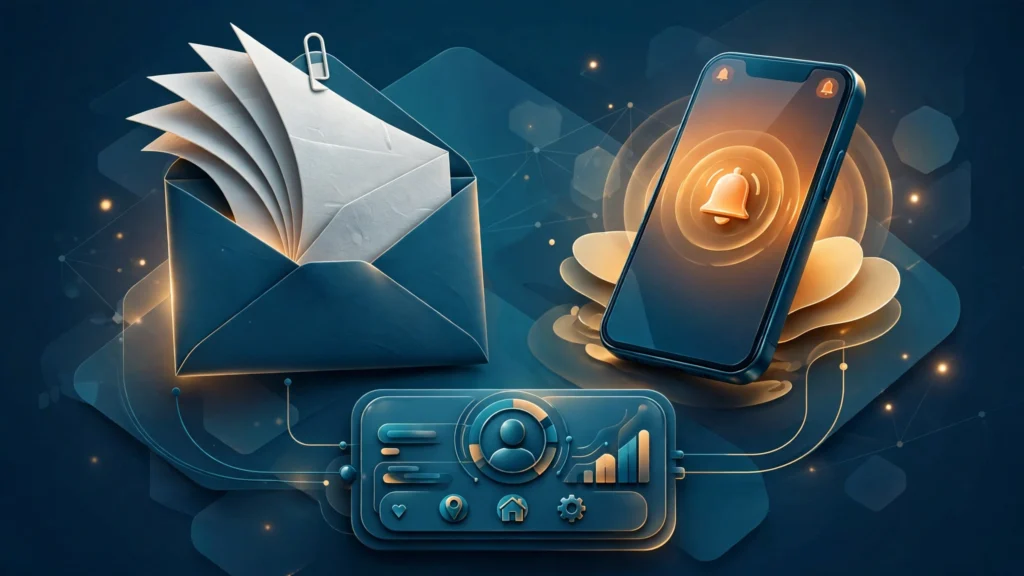
Multichannel marketing means a brand uses several channels, but each channel runs on a separate plan, a separate list, and separate reporting. The email team sends a campaign on Tuesday. The SMS tool sends a promotion on Thursday. Neither system knows what the other one sent, so a loyal customer can receive five messages in a week that never reference each other.
Omnichannel marketing automation connects the channels around one customer record and one journey. The promotion the customer sees by text is the same promotion the email explained in depth, the website banner matches both, and every channel stops the moment the customer converts. The difference is not the number of channels. The difference is whether the channels share memory.
| Aspect | Multichannel | Omnichannel |
|---|---|---|
| Contact data | A separate list inside each tool | One shared contact record for both channels |
| Planning | Each channel follows a separate calendar | One journey plan across email and SMS |
| Timing | Fixed send times chosen per tool | Behaviour triggers with channel logic |
| Suppression | Manual exports moved between tools | Automatic and shared across channels |
| Reporting | Channel totals counted apart | Revenue credited once per order |
| Customer view | Fragments scattered per channel | One timeline per customer |
Why Combine Email and SMS in One Workflow
Email and SMS solve different problems. Email is inexpensive at scale, carries images, long copy, and links, and waits patiently in an inbox until the reader has time. SMS is short, lands on a lock screen, and suits messages with a deadline: a cart that expires, a delivery that arrives today, a sale that ends tonight. A combined workflow assigns each job to the channel that does it best, instead of forcing every message into both channels.
The pairing also protects results. When an important email goes unopened, a short text can rescue the message before the moment passes. When a text would feel too abrupt on its own, an earlier email carries the context, so the text reads as a reminder instead of a surprise. Teams that watch engagement closely already know the pattern from the email side: our breakdown of why an email open rate drops and the benchmarks in what is a good open rate for email marketing show how fast attention fades, and a well-timed text is one practical answer to that fade.
Email tells the story. SMS rings the bell. Automation decides which one the moment needs.
How to Build an Omnichannel Email and SMS Workflow
A durable omnichannel workflow starts on paper, not inside the automation builder. Five steps cover most programs, from a two-person store to a large ecommerce brand.
Step 1: Collect Consent for Both Channels at Signup
Ask for the email address and the phone number as two separate permissions, because the law and the carriers treat them as separate permissions. A pre-ticked box that bundles texting into email signup creates consent records that will not survive scrutiny. State what the subscriber will receive, how often, and how to stop it, at the moment of signup. A clean consent record per channel also makes later platform migration far easier, because the new tool can import proof instead of promises.
Step 2: Map One Journey Before Writing Any Message
Write the journey as stages: discovery, first purchase, repeat purchase, lapse, win-back. Under each stage, note the question the customer is asking and the single action the brand wants. The map exposes gaps that channel thinking hides, such as a welcome series that never mentions the store app, or a win-back flow that starts before the lapse window has even opened.
Step 3: Give Every Step One Primary Channel
Decide, for each step, which channel leads. Education, storytelling, and multi-product showcases lead on email. Deadline reminders, delivery updates with a marketing angle, and last-chance alerts lead on SMS. The second channel supports only when the first one fails to land: no open within a set window, no click, no purchase. This single rule prevents the most common omnichannel failure, which is sending the same message twice in two formats.
Step 4: Add Wait, Check, and Branch Logic
Between steps, insert waits that match buying behaviour, then a check: did the contact open, click, buy, or reply? Each answer routes the contact down a different branch. Buyers exit the flow and enter post-purchase education. Clickers who did not buy receive a deeper email. Non-openers receive the SMS reminder. Agentic systems push this further: our guide to agentic AI in email marketing shows tools that adjust timing and channel mix on their own, inside guardrails the marketer sets.
Step 5: Set Frequency Caps and Quiet Hours
Cap total touches per contact across both channels, for example two emails and one text per week outside transactional flows, and enforce quiet hours for texting even when the platform allows wider windows. Caps feel restrictive on paper and liberating in results: complaint rates fall, unsubscribe rates fall, and each message carries more weight because the channel stays welcome.
5 Email and SMS Automation Examples That Convert
The five workflows below cover the moments where email sms marketing automation earns the clearest returns. Each one names the trigger, the email role, and the SMS role.
1. Welcome Series With an SMS Assist
The email series introduces the brand, the bestsellers, and the story behind the products across three or four sends. The SMS layer stays light: one text after signup confirms the subscription and delivers the welcome code, and a second text fires only when the first email goes unopened for a day. Consent capture at this stage decides the health of the whole program, so the signup form asks for the phone number as a separate, optional field with plain language about message frequency.
2. Abandoned Cart Flow Across Both Channels
The classic abandoned cart sms email pairing runs on timing. An email lands within the first hours with the cart contents, reviews, and delivery details. If the cart stays open, a text follows with a short reminder and a direct link back to checkout. A final email near the deadline carries the strongest incentive the margin allows. The rule that protects margin: the text never carries a bigger discount than the email, or shoppers learn to wait for the text.
3. Browse Abandonment With a Soft SMS Nudge
Browse abandonment sits higher in the funnel, so the touch stays softer. An email shows the viewed category with related picks and social proof. A text fires only for high-intent signals, such as repeat views of one product or a price drop on a viewed item. Most browse events should end with email alone; restraint keeps the SMS channel trusted for moments that matter more.
4. Post-Purchase Updates That Cross-Sell
Order and shipping updates are transactional, and customers read them at rates marketers dream about. The marketing layer rides along carefully: a delivery email carries care guidance and one related product, while a text confirms delivery and invites a review after the product has had time to prove useful. Keep the transactional content first and the promotion second, in both channels, so the message stays compliant and welcome.
5. Win-Back Flow for Lapsed Buyers
A lapse trigger, set from the normal repeat-purchase gap for the store, starts with an email that acknowledges the gap and leads with new arrivals or a changed range. A reminder email follows with an incentive test. The closing text is short and honest, with a clear deadline and an easy exit. After the flow ends, non-responders move to a low-frequency list instead of receiving the full campaign calendar.
Email vs SMS: Strengths, Costs, and Best Uses
Neither channel wins in general. Each one wins at specific jobs, and the workflow designer earns a salary by knowing the split. The table below summarises the working differences, and the paragraph after it covers cost and return in plain terms.
| Factor | SMS | |
|---|---|---|
| Attention window | Waits in the inbox for hours or days | Read within minutes of arrival |
| Content depth | Long copy, images, and many links | One idea and one link in a short message |
| Cost shape | Low cost per send at scale | Per-message fees plus number rental |
| Consent basis | Signup consent plus CAN-SPAM duties | Prior express written consent under the TCPA |
| Best jobs | Education, stories, and large offers | Deadlines, reminders, and delivery moments |
| Main risk | Spam folder placement and quiet ignoring | Complaints, carrier filtering, and fast opt-outs |
On cost, email stays the cheaper channel per message by a wide margin, while SMS adds per-message fees, number rental, and carrier charges. On return, the split depends on the job: a text that rescues a high-value cart can repay a month of message fees, while a text used for a general newsletter would burn budget and goodwill at once. Judge the pair on blended revenue per flow, not on channel pride.
Is SMS Marketing Legal? Consent, Opt-Out, and Quiet Hours

In the United States, marketing texts sit under the Telephone Consumer Protection Act, enforced by the FCC. The FCC consumer guide on unwanted calls and texts states the core rule plainly: text messages sent to a mobile phone using an autodialer are banned unless the phone owner gave consent first, and commercial texts require written consent. In practice, that means prior express written consent for promotional texting: a clear signup action, language that names the brand and the message type, and a record the brand can produce later.
Consent is only half of the duty. The same FCC guidance confirms that a person may opt out of texts at any time and in any reasonable manner, even after giving consent, so STOP must work instantly and every reasonable alternative, such as a reply asking to end messages, must be honoured without argument. Timing matters as well: telemarketing contact is prohibited before 8 in the morning and after 9 in the evening in the local time of the recipient. The CTIA Messaging Principles and Best Practices add the industry layer on top of the law: consent records, clear calls to action, working opt-out routes, and no rented or shared opt-in lists.
Email carries a lighter consent model with its own duties. The FTC CAN-SPAM compliance guide requires accurate header information, honest subject lines, a clear opt-out route in every commercial message, and opt-out requests honoured within ten business days. A combined program has to respect both rule sets at once, inside one suppression list, so an email unsubscribe and an SMS STOP each silence the right channel immediately, and a global opt-out silences both. The FTC guidance on spam text messages shows the consumer side of the same system, including the 7726 reporting route that carriers use to spot abuse.
How to Choose an Email and SMS Automation Platform
The best email sms automation tools in 2026 share a short list of traits. One contact record with per-channel consent fields. A visual builder where email and text steps sit in the same flow. Native number management, including short code or toll-free options and carrier registration handled inside the product. Suppression that syncs in real time. Reporting that credits revenue once. Anything less forces the team back into exports and spreadsheets, which is where omnichannel programs go to die.
Compare real pricing pages before trusting a demo. Our ActiveCampaign pricing breakdown shows how a mature platform tiers automation features, and our AWeber review covers the simpler end of the market, where SMS may arrive as an add-on rather than a core channel. Also read the fine print of the editor: the Act-On email composer migration is a reminder that builders change under the feet of a marketing team, and a platform switch later, as our guide to switching an email service provider explains, goes far better when consent records and flow diagrams were kept clean from the start.
One more test belongs in every evaluation: send the trial flows to real phones and real inboxes, including AI-managed ones. Our guide to writing emails for AI inboxes shows how Gmail and Apple Mail now summarise messages before a human reads them, and the AI email personalization playbook shows how send-time and content prediction lift both channels. A platform that cannot segment by channel behaviour, or that hides SMS replies from the contact timeline, will fail these tests quietly and expensively.
How Much Does SMS Marketing Cost
There is no single price, because an SMS program pays in layers. The platform charges a plan tier that includes a message allowance or sells messages as an add-on. Each message then carries a per-send fee that varies by country, carrier, and volume, and the sending number itself rents by the month: a toll-free number costs little, a dedicated short code costs far more and takes weeks of approval. Carrier surcharges and registration fees add a final layer. The safe budget rule for a first program is narrow: fund the welcome, cart, and post-purchase flows first, measure the return per flow, and let profitable flows pay for expansion into campaigns.
How to Measure Email and SMS Automation

Measure the program at the flow level, not the channel level. For each workflow, track revenue per recipient, conversion rate, opt-out rate per channel, and the share of conversions where the text assisted an email or the email assisted a text. Channel totals still matter for cost control, but flow totals decide where to invest. A flow with strong revenue and a rising SMS opt-out rate is borrowing from the future, and the dashboard should say so.
Holdouts keep the numbers honest. Keep a small control group out of the SMS layer for one quarter and compare total revenue per customer, not clicks. Attribution will still leak: customers see messages that tracking never records, a problem our piece on the dark funnel in B2B SaaS explores for pipeline, and the same blind spots apply to consumer flows. Accept the leak, measure directionally, and let holdouts settle the arguments that dashboards cannot.
One journey, one record, one suppression list. Everything else in omnichannel marketing is decoration.
Common Email and SMS Automation Mistakes
Most failed omnichannel programs fail in predictable places. The five mistakes below account for nearly every post-mortem, and each one has a cheap fix.
Mistake 1: Sending the Same Message on Both Channels
Duplication trains customers to ignore one channel completely, and the channel they ignore is usually the cheaper one. If the text repeats the email word for word, the email becomes the backup copy nobody opens. Give each channel a distinct job in the flow, and let the second channel add urgency or detail, never a copy.
Mistake 2: Texting the Whole Email List
An email list is not an SMS list. Contacts who gave an email address years ago never consented to texts, and uploading the full list into the SMS tool creates legal exposure and instant opt-outs. Build the texting list only from explicit phone opt-ins, and grow it with keyword campaigns, checkout checkboxes, and QR codes that state the terms before the first message.
Mistake 3: Ignoring Time Zones and Quiet Hours
A cart reminder that lands at 3 in the morning converts anger, not sales. Schedule texts against the local time of the recipient, hold non-urgent texts that would fire inside quiet hours until morning, and let email carry anything that cannot wait for a lawful hour.
Mistake 4: Letting Two Tools Run Two Programs
Two platforms with two suppression lists will eventually message a customer who already opted out or already bought, and one such message can cost more trust than a month of good flows builds. If separate tools must stay, sync suppression and purchase events between them daily at minimum, and treat any sync failure as a stop-the-line incident.
Mistake 5: Judging SMS by Open Rate Alone
Texting has no reliable open tracking, so teams invent confidence from delivery receipts and click rates on shortened links. Judge the channel by flow revenue, holdout lift, and opt-out cost. A text flow that earns well while shedding subscribers may still be a net loss once the shrinking list is priced in.
Conclusion
Email sms marketing automation works when the two channels stop competing and start cooperating: email carries the story, SMS carries the moment, and one workflow with one consent record and one suppression list directs both. Start narrow, with the welcome, cart, and post-purchase flows. Respect consent as an asset rather than a hurdle, because the bulk sender requirements era has made sender reputation the price of inbox access on the email side, and carrier filtering plays the same role for texting.
Growth then becomes a sequencing question: which flow next, which segment next, which platform tier next. The warning signs that a team has outgrown a basic setup mirror the signs a team is outgrowing a current CRM: workarounds multiply, reporting needs exports, and the tools dictate the strategy. When those signs appear, run a structured evaluation, the way our marketing software RFP tips recommend, and let the flow map from this guide become the requirements list. The brands that win the inbox and the lock screen in 2026 will not be the brands that send the most. They will be the brands whose every message, on either channel, arrives because a workflow decided it earned the moment.
FAQs
Should I combine email and SMS marketing?
Yes, when the two channels run inside one workflow with one consent record and one suppression list. Email carries depth and detail, SMS carries urgency and deadlines, and the workflow assigns each message to the channel that fits the moment. Combining the channels inside separate tools, with separate lists and no shared suppression, creates duplication and opt-out risk instead of lift.
How do I add SMS to an abandoned cart flow?
Keep the email first: send the rich cart reminder with contents, reviews, and delivery details within the first hours. Add the text as the second step for contacts who gave texting consent and did not return: one short message, one link, close to the deadline. Exit every buyer from the flow the moment checkout completes, and never let the text carry a larger discount than the email offered.
Is SMS marketing legal?
Yes, with consent and discipline. In the United States, the TCPA and FCC rules require prior consent for autodialed texts, and commercial texts require written consent. Every marketing text needs a working opt-out, honoured at once, and contact must respect quiet hours, with no telemarketing before 8 in the morning or after 9 in the evening local time. Consent records must be stored and producible.
What is the difference between omnichannel and multichannel marketing?
Multichannel marketing uses several channels that run apart: separate lists, separate calendars, separate reports. Omnichannel marketing connects the channels around one customer record and one journey, so each channel knows what the others sent, every channel stops at conversion, and revenue is credited once. The channel count can be identical. The shared memory is the difference.
How much does SMS marketing cost?
Costs arrive in layers: a platform tier or add-on, a per-message fee that varies by country, carrier, and volume, monthly rental for the sending number, and carrier surcharges or registration fees. A toll-free number keeps the rental low, while a dedicated short code costs far more. Fund the highest-intent flows first, then expand from measured return rather than from a fixed monthly guess.
Which platform is best for email and SMS automation?
The best fit is the platform that keeps one contact record with per-channel consent, places email and text steps in one visual flow, manages numbers and carrier registration natively, syncs suppression in real time, and credits revenue once per order. Test finalists with real flows on real devices, compare pricing at the volume the program will reach in a year, and weight consent handling as heavily as features.